|
"The Galician Rebbetzin," which
now is playing in Gabel's [Public] Theatre, is a funny comedy
with beautiful music and cheerful dances. The content of the
story is built on a funny idea, surrounded by many
fine songs, heartfelt melodies, comical scenes, and images
of Hasidic life in Galicia.
The usual Yiddish audience, which comes
to the theatre, satisfies itself, this rib, with a comedy
that consists only of comedy. They need to have something
sad, tragic, which touches their heart and brings tears to
their
eyes. There is a kind of theatre visitor, mainly women, who
want for a couple of dollars not only to laugh enough, but
also to enjoy themselves. There are enough open hearts,
heavy hearts in the world of hustle and bustle. Tears are a
relief, a heavenly pleasure. And where is there a better
place, as in the theatre, to relieve the heart through
tears, to shed from oneself, though for a moment, the burden
of gray, waking worries, sadness, grief!
Well, you see, "The Galician Rebbetzin" has such heartbreaking, tear-jerking moments, which
every second are "flavored" with hilarious jokes and
colorful scenarios. You're obviously getting a whole Yiddish
meal with a mass of courses -- fish, cholent, kugel, etc.
The audience receives "its money's worth."
The comedy unfolds from the beginning
quite tragically -- hearts in love are separated, torn, and not
one pair of hearts, but three of them.
Zeligel, the son of the Belz rabbi's
wife, is in love with Feygele [played by Jennie Goldstein],
the daughter of the hotel owner, Rabbi Feivishel. But Rabbi
Barukh [played by Boris Rosenthal], the head of the Belz
community, wants
no other, that Zeligel should marry his daughter, Gitele
[played by Zina Goldstein]. Before the Belz rabbi passes
away, they make through a vow, that Zeligel will marry
Gitele. Gitele, however, is in love with Alexander, a
painter, the son of an old meshkhil (educated man).
R' Barukh, the head of the community,
is a staunch Jew, with a strong hand, and a difficult hand.
He is the person in charge of the Belz court, and the
good, slender, Belz rabbi's wife, Fruma [played by Mary
Wilensky], trembles before him. He threatens her, that if
Zeligel will not marry his Gitele and take over the rabbi's
chair on the Belz court, he will bring over the Galician
rebbetzin, and she will take Fruma's place, and they will
reject Fruma.
Fruma, naturally, keeps with the head
of the community, but Zeligel disappears. Where was he able
to flee to? Probably to Feygele. Rabbi Barukh goes there and
brings him home. Rabbi Barukh may not have followed, but he
cannot break his mother's heart. Tomorrow is the yahrzayt
of his father's death, and he must, according to his
father's wish, take over the rabbi's chair in the Belz
court, a nit, Rabbi Barukh threatens to evict his
mother. He gives himself under [?]. Gitele also cries and
complains that she cannot live, for she is too weak and
trembles before her evil father. Getting ready for the
wedding, the young hearts in love do not want
to know of the old Hasid's lunacy and traditions, and are
repulsed.
There is a third pair of lovers who are
separated. Sam [played by Marty Baratz], an American
student, R' Feivish's son. He is called Feygele's brother,
who comes to be a guest in his home, who is in love with
Rivkele, the daughter of the cook of the Belz court. The
third love, however, is a engaged. The main root of this
heart-rending entanglement is Gitele-Foygele-Zeligel-Alexander.
Sam, however, is a lively American youth. He is a fire, a
conflagration, dancing, singing and jumping, that the stage
is burning under his feet. Well, one must have him, and
since he's already here, why should such a young man not
fall in love with a young beautiful girl, and indeed suffer
a little from love-pains before he marries her. Since he is
an American, he should be shunned -- well, not in Galicia.
So, the young hearts languish. It's
bad, you can not do anything with Rabbi Barukh. They are too
weak to go against such a "villain." But not Feygele. Feygele is
very much another type of girl -- with a strong character,
and with a head. And through a wise idea that she carries
out, all three pairs of lovers should achieve their
heart's desire and marry.
Hear what she does:
She decides to persuade Rabbi Barukh,
and to "beat him at his own game," as one would say. After
all, Rabbi Barukh has always kept talking and recounting the
wonders of a Galician rebbetzin, a great woman of charity. He used to
spring into the "Kaddish" whenever her name was mentioned. But he
had never seen her, and no one else in Belz knew her. Well,
Feygele settles in and introduces herself as the Galician
rebbetzin and comes down to the Belz court on the day that
Zeligel and Gitele's wedding was to take place. She came
down with a great parade, with meshoyrer (choirboys),
gaboim (trustees of a synagogue), and thus in honor
of the Hasidim. In shtreimels (traditional fur hats)
and zupitses [robes], as is their custom. It goes without
saying that this "suite" of Feygele's is composed of our
acquaintance, Alexander, and his father the meshkhil, Sam
and another pair that have helped her pull off her plan.
When the Galician rebbetzin came down,
the Belz court was in confusion. Everyone was running on
tiptoes for her. After she presented them with a portion of
"Torah," according to the custom of Hasidic rabbis, she
tells them that she had a dream, and she was called from
heaven to marry Zeligel. And with one blow, she had already
attended to the other two pairs as well. They must prepare
to get married, as it was told to her in a dream.
Naturally, no one said a word against
this, even Rabbi Barukh. The Galician rebbetzin's word is
sacred. Three canopies were erected on the site, and
immediately afterwards, takes off her rabbinic clothes, and
Rabbi Barukh sticks out his nose.
* * *
No questions need to be asked if one
sees any irregularity, a foolish awkwardness in the
proceedings. As a "musical comedy," without pretensions of
realism, this is quite a beautiful thing. Especially
beautiful is the second act, which has in it many cozy
Yiddishes. A couple of moments in the first act mention the
main idea of the magnificent German piece, "Old Heidelberg,"
which several years back was played here as a musical
comedy, so magically fine and strong.
When it comes to acting, you have to
look with the same eye. Many trifles and traits are
foolishly exaggerated, unnatural, which disturbs the
illusion, the credibility, and it seems unnecessary. But it
all comes together, becoming worthless in the general course
of the play to create the appropriateness of the situations.
To make them bold, comic.
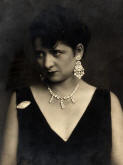
Jennie Goldstein plays the main role.
As Feygele, very lively, merry and with taste. She feels
herself on the stage, "like she is at home." Often she
throws a word to the crowd, or a joke, just as she herself
would have made fun of what was going on on the stage, well,
she's all right!
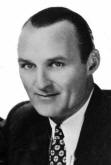
Boris Rosenthal plays Rabbi Barukh, the
head of the community, as a hard-hearted, bad person, and an
old adulterer, who becomes sinfully restless as soon as he
sees a woman, and looks at her from all sides with
disgusting-passionate glances, he is not bad at all.
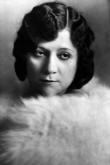
Zena Goldstein [listed as Zena
Goldberg, her married name in real life] is quite pleasant
as Gitele, and Mary Wilensky as Fruma, the Belz rebbetzin.
Abe Sincoff plays the shemash
(sexton), Rev. Tsadok, somehow a maddening creation, very
comical, but he creates a lot of laughter.
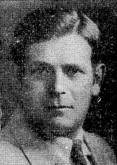
Marty Baratz, as Sam, the American
young man, is, as was already said, a mischievous person on
the stage.
Pinchas Lawenda excels with his gypsy
songs.
The other participants in the
production are:
Sam Rosenstein, Irving Honigman, Simon
Wolf, Sam Gertler, Goldie Eisman, Sally Schorr, Harry
Thomashefsky, Gussie Juvelier, and Simeon Ruskin.
* * * |