|
Majdanek was
created by extending a prisoner-of-war camp for Poles and
Russians that had opened in 1939 in the Lublin suburb of
Majdan Tatarski. By the summer of 1942 it was an operating
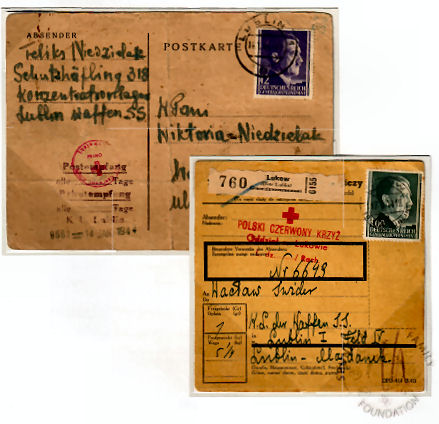
death camp. In February 1943 the Polish Red Cross expressed
concern about the inmates' fate; in response, the Nazis
permitted selected Polish prisoners to receive parcels, and
required each recipient to send a post card acknowledgment.
Almost 500,000 prisoners from 28 countries passed through
Majdanek, and 360,000 of them perished. Majdanek's gas
chambers, drums of Zyklon B cyanide poison, and crematorium
ovens were intact when Soviet forces liberated the camp on
July 24, 1944, giving the outside world its first
opportunity to view the scale and efficiency of the Nazis'
mass-murder machinery.
next >>

Below: A January 17, 1944,
parcel waybill for a food shipment to a Majdanek prisoner
from the Polish Red Cross office at Lukow, and a censored
January 14, 1944, prisoner's formular acknowledgement post
card sent by a Majdanek inmate, with Red Cross marking. |