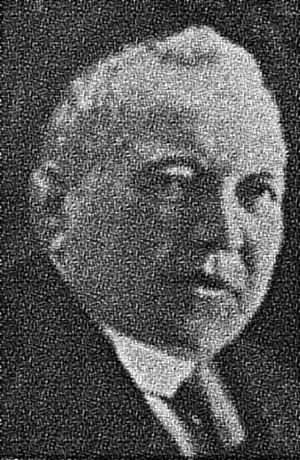
|
Jacob P. Adler recalls that he was
the first to whom they turned with the plan to
establish a Yiddish theatre in Odessa. It had
been decided that Adler and Rosenberg should prepare
the troupe, and Spivakowski should travel to
Peterburg in order to obtain permission to play and
also copy plays while there.
"Spivakowski descended from a
respectable family, which among its members were
many doctors and lawyers -- Jacob P. Adler recalls
-- He also was very imposing and influential. He
knew French perfectly and dressed very nicely. His
clothes were a model; he was simply considered a
model. He therefore had access to wealthy people,
especially his wealthy relatives. Because of this,
it was not difficult for him to get the necessary
sums of money for the creation of a Yiddish theatre.
In the span of several weeks Spivakowski in
Peterburg received permission and the censors and
founded the troupe,
which -- according to
Adler -- was advertised as the "first Yiddish troupe
in Russia under the leadership of Yakov
Spivakowski."
According to B. Gorin and
Israel Rosenberg, who was an actor for Abraham
Goldfaden, after earlier traveling to Odessa and
decided here to found a Yiddish theatre. Apparently,
in Odessa he he united with Spivakowski: "Rosenberg
and Spivakowski have become attracted to the Odessa
folksinger, put together a troupe in which there
joined: Jacob Katzman, Mendel (Max) Abramovich, Ari
Shrage, Aron Tager, Boris Altman and Sophia
Oberlander. They rented the Remeslengi Club (where a
German troupe had previously played), and for the
first time in Odessa (according to Y. Riminik -- 23
January 1879) they began to play Yiddish pieces. The
first evening they played three vaudevilles:
"Fir far pertseleyene teler," "Di shveblekh," and
"Di dray toybe," all written by A. Goldfaden.
Besides this, the folksinger of the night sang
couplets from Goldfaden's repertoire. The
audience licked its fingers, and the same program
continued for several times. It turned out that
Rosenberg and Spivakowski, who already had been
thought of as a great artist, were afraid to rely
entirely on the folk singers of the night and
therefore they started with vaudevilles, which were
closer to them. The first entire piece was
"Brayndele Kozak" by A. Goldfaden. People simply
stood on their head. Such a large audience came to
see the comedy. The Podriatshiks, who had
returned from Bucharest, miracles took place in the
Yiddish theatre. The folksinger picked up the
couplets from Goldfaden's pieces and brought them
into the Yiddish houses. And this all ignited the
curiosity to see what they were playing in the
Yiddish theatre. After they put on "Shmendrik" and
"Di kaprizne tokhter (The Capricious Daughter)." In
the last play there also debuted the late, famous
Yiddish actor Jacob P. Adler."
As Adler tells
it, Spivakowski was the main coupletist of the
troupe. He used to throw out cynical expressions and
two-word phrases while singing couplets. The actors
therefore used to call him "Der reiner."
During the first productions in Odessa, Spivakowski
also used to by necessity play several roles in one
play.
"The director of the troupe -- B.
Gorin writes -- lived a good life. The business in
the theatre was good, and the actors wore top hats,
long "winchikovs," which then were in
fashion, and suede gloves. Around the time (1879)
Goldfaden decided to travel to Odessa. ... They
(Goldfaden and Libresko) arrived by themselves,
without the troupe, but this was enough, that
Rosenberg and Spivakowski should cease to give their
productions. In Romania no author's rights were
recognized, but in Russia the right of the writer
was granted to him so that foreigners should not use
his works, except that it was enough that Goldfaden
himself came, that the previous campaign should step
aside. This company had other plays -- Latayner's
and Hurwitz's -- only with his arrival did they lose
any desire to make Shabbat their own. The fear and
treachery for Goldfaden was very great among the
actors, and they called him "Rabbi" and "Father."
Adler recalls that Goldfaden even then had tried
to override Spivakowski, that he should join in his
troupe, but soon Spivakowski joined Goldfaden's
troupe, and shortly thereafter (25 May) with several
actors left to go on a tour across Russia and Poland
(1879). At the same time, Spivakowski everywhere had
access to these circles of intelligentsia. He used
to visit the most beautiful Jewish houses and show
his sympathy and respect for the Yiddish theatre
everywhere. He even used to visit rabbis, and they
were invited to come to the Yiddish theatre, showing
what a good shul this is for the public, especially
for the craftsman and worker.
The Polish Jews had -- according to Jacob P. Adler
-- very much loved Spivakowski as an actor, and the
name "Spivakowski," as the Polish Jews had said it,
was very popular in Poland
In the same year
(1879) Spivakowski played in Warsaw under this and
Israel Rosenberg's direction and brought from Riga
Mrs. Berta Berlin (later -- Tanzman). here they
united with the Warsaw actors and played in the
Eldorado Theatre until the government banned Yiddish
theatre, and Spivakowski continued to perform in A.
Goldfaden's troupe in Odessa.
B. Weinstein recalls in his memoirs:
" ... The only non-Jewish coupletist that Odessa had
then already known well was a certain actor with the
name of Spivakowski. He also used to play with a
Russian operetta troupe that used to give
performances four times per week in the same
Marienteater. The other three evenings there
there used to perform Goldfaden's Yiddish troupe."
"But in a short time after -- recalls B. Gorin
-- we meet him (Spivakowski) already in the province
in Tuvia (Naftali) Goldfaden's troupe. It is easy to
convince you that he did not please God, and he was
very angry at the founder of the theatre." This was
even the si...h that Spivakowski convinced Grikh
Omer to bring over from Romania Mogulesko with his
troupe in Goldfaden's place.
"We can't decide
-- writes B. Gorin -- whether Spivakowski was the
first who gave advice to Omer and gave him this
plan, whether there were already those who wanted to
settle with Goldfaden, but what is certain is that
Omer sent Spivakowski as an envoy to Romania, he
should bring Mogulesko with his troupe. In Iasi
Spivakowski met Itzhak Libreski, who until a short
time back was the right hand of Goldfaden. In Odessa
Goldfaden dismissed him from his position and sent
him home to Iasi. He therefore was angry with
Goldfaden, and Goldfaden's enemies put together a
troupe and traveled to Odessa. Mogulesko and
Latayner were then in Botoșani, and they barely made
it through. They grabbed the proposal like a hot
stone and all four immediately left for Odessa."
According to Yitzhak Libresko as he tells it in
his memoirs, there Spivakowski arranged several
evenings in the Christian "Max Garden," in which
Spivakowski read and therefore received several
hundred francs, and when they arrived in Odessa,
they did not meet anyone playing in the Mariinsky
Theatre, because Abraham Goldfaden had played then
with his troupe in Nikolayev, and Naftali Goldfaden
in Kishinev.
But Spivakowski, it turns out, did
not remain a long time in Odessa. According to
Nathan Levin, in 1880 with three singers as a
quartet, he used to perform in the entertainment
in Spivakowski's Russian troupe in Minsk in the
Governor's Garden. And according to Adler, in 1882
they, together lived through the pogrom in
Niezshin. Soon thereafter there again was issued a
ban on playing Yiddish theatre. The troupe disbanded
and Spivakowski returned to Southern Russia.
After the large ban (17 August 1883),
when all the Yiddish actors had left Russia,
Spivakowski, with his troupe (Lazer Zuckerman, Aba
Shoengold, Sarah Goldstein Karp, Goldschmidt, Y.
Weinstock, Saul Esinstein, the Kaufmans, et al.) and
also the prompter Berner, traveled to Konigsberg
(Prussian), where they played for two months, then
for two weeks in Danzig, and from there they went
away to Berlin.
After playing for a certain
time in Germany, Spivakowski still with several
actors, traveled to Warsaw, where they used to
perform in the Eldorado Theatre with "concerts" (due
to the ban on playing theatre). At the same time -- B.
Gorin writes -- people complained about how to
package an act of a play and sometimes a whole play
under the name "concert." It often happened at such
concerts that in the middle of a scene they
announced that a pristav has arrived in the theatre,
and while speaking, people on the stage started to
sing just into the world. The actors did not want to
play like that and individually they left to seek
their happiness in other countries. ."
For a certain period of
time, the traces of Spivakowski's activity are
lost. At first, in 1887, we see him, together with
Abraham Goldfaden in New York.
Jacob P. Adler
admits, however, that when he came to New York, he
met Spivakowski and Goldfaden there. They turned
back and forth. Then two Yiddish theatres existed in New
York, and they had at their head Hurwitz
and Zilberman. Both of them did not want to
enter. All three of us turned around and looked at
the pieces of sky that were visible between the
skyscrapers of the New York streets. Seeing that
there was no place for us in New York, we decided to
leave from there. Goldfaden left for Galicia, and
started playing Yiddish theatre there. I went back
to Russia: "for me I returned to my Russia, -- he
said -- as good as it may be in America with all its
golden luck, it is much better in Russia."
According to David Kessler, the entire time
Spivakowski was with the actor-strikers (against
Goldfaden), and after the strike he entered and
played with the troupe.
Boris Thomashefsky recalls
that for a short time Spivakowski was with him as a
partner in Boston and Baltimore, and during the
short time that Spivakowski was in America, he
earned a great name, but after receiving
permission(!) to play in Russia, he went back there.
Returning to
Russia, Spivakowski began to direct
by himself or in partnership with troupes and gained
great popularity.
R. Granovsky writes: "At that time I met the
actor and theatre entrepreneur Spivakowski, who came
with a troupe to Odessa to play Yiddish theatre. In
order to obtain a permit, he turned to the engineer
Gurland, with whom I worked and then lived on after
I left the position. Spivakowski's request was that
Gurland, through his influence, should help him.
Gurland introduced me to him, and I became friends
with him. From this friendship I told (Isaac-Joel)
Linetzky and invited him to help obtain a permit for
Spivakowski. Linetzky said to us: "I have a piece of
advice ... let Spivakowski himself turn to Osip
Mikhailovich Lerner and give him a few rubles,[and]
he will do it for him." ... I went in
Linetzky's name, and I obtained a permit to play
Yiddish theatre in German ..."
In 1892 Spivakowski played in Warsaw.
Esther-Rokhl Kaminska recalls in her memoirs that
Spivakowski arrived, together with Fiszon and his
troupe and played in the Eldorado Theatre. He
performed as "Bar Kokhba" in Gutzkow's "Uriel
Acosta" ("Uriel" -- Julius Oskar), but he did not
have success. Then he took several young actors and
played with them on the same street in a hall that
was called "Chateau de Fleur." Kaminska
portrayed such a
production: "Here there was a small stage. He
put on "Shulamis," and played Absalom himself. He
was wrapped in a red blanket, from under which his
black pants and shorts could be seen. He looked so
funny that I understood even then that this was not
a theatre play."
In the course of many years
later, Spivakowski continued to occupy one of the
most prominent places as an actor. He usually led
troops in partnership with Fiszon or Sam Adler.
About the conditions under which the troupes
used to come out to play Yiddish theatre in Czarist
Russia, Noakh Prilutski tells us: I think -- the
first time in my life (1905) I was in the Yiddish
theatre -- in Peterburg, while Spivakowski's troupe
appeared in one of the most beautiful theatre halls
of the city. This troupe had bought the right to
play on the banks of the Neva for a very expensive
price: it had to give away twenty-five percent of
the gross income from every evening of the "Bloyen
tseylem (Blue Cross?)." ... The troupe was not yet
able to play in Yiddish. It was called,
"Nyemetska-Yevreyskaya troupe," and therefore, one
half of the actors had to speak half-German on
stage, and the other only half-Yiddish..."
The actor Yermiyahu Adler tells us that during a ban
on Yiddish theatre in Russia, Spivakowski directed
and acted in Russian in Goldfaden's "Shulamis."
In actors' circles, there was also an
uncontrolled news that Spivakowski was baptized. At
any rate, he certainly had baptismal beauty, which
made it possible for him to be in the city, which
was outside the Jewish domain in Czarist Russia.
Around 1911 Spivakowski left Russia and began to
wander about with small troupes across Western
Europe, mainly in Switzerland and Belgium.
Abraham Reisen portrays his meeting with Spivakowski
in Belgium: "The strongest impression on me then was
in Antwerp in 1913, [where] the Yiddish actor
Spivakowski, who already was an impoverished man,
both as an actor, as well as a wealthy man. Such a
kind of philosophical calm, as it was then noticed
in Spivakowski's holding on to his big-human smile,
and his acceptance-love of all the insults, as a
fallen star, was difficult to find and it evoked in
me the feeling of sympathy, regardless of what kind
of Spivakowski-actor was far from me. ... In Antwerp
he already existed with is former name, played in
small roles in the local Yiddish theatre, which
consisted of the Waxman troupe, and even in that the
troupe was of the unimportant actors.
"He had
great pleasure when he participated in my "evening,"
which indeed took place in Antwerp's Yiddish
theatre, playing in my one-acter, "Gute brider (Good
Brother)." He played one of the merchants and he
really played such a small and unimportant role with
a lot of humor and understanding for the type of a
Warsaw antique dealer in general. When I expressed
to him -- already after playing, in an exaggerated
form in order to encourage him -- my opinion about
his playing, he blushed like a young actor just
starting out. He was happy that there was still
someone who appreciated his stage art and, as if
intoxicated by his success, murmured "What then? If
we want, we can do something else." ... He had
demonstrated that, not looking, he was an
actor from the former operettas and melodramas. He
nevertheless was familiar with the Yiddish
literature, remembered with love and with pleasure
the names of I.L. Peretz, it is not surprising that
he also knows Sholem Asch personally, the author of
"God of Vengeance," and even in this -- according to
my opinion -- a golden drama that took part already
in the last years. ... He generally was a
mentsh with intelligence, noble manners, and with a
true, golden heart, as such good people call the
nation."
After the war, Spivakowski
arrived in London, and here he soon felt the
indifference shown to him. The possibility to act in
the Pavilion Theatre was not given to him "although
he still had -- as Y.M. Blang writes -- enough
ability to perform in certain roles. To save himself
and his family from hunger, he gathered a few
amateurs, and with them performed several Yiddish
and Russian plays. It is understood that this was
not far enough to better his material condition. In
addition, he became ill and went from one operation
to another. Rarely, when someone remembered him in
his bed, he lived and walked the streets of London
sick and deeply depressed, or sat for hours in the
various restaurants of Whitechapel, where the
Yiddish actors and actresses gather. He was always
seen as a silent person, and if the old Spivakowski
spoke, what he portrayed, the role he once played in
the Yiddish theatre world and how all the current
famous Yiddish actors, who are scattered in various
parts of the entire world were once his disciples.
All these attempts (calls to help Spivakowski) did
not always yield [results], and it goes without
saying that the fault in this was [due] also to a
certain part of the actors, who unfortunately did
not pay the proper attention to their rabbi. ...
While he lay in the hospital, God forbid, no actor
was mentioned, but someone better known Herr Bleker
(brother of the actress Rachelle Rosenfeld), and the
writer of this account, who came out with a big
protest call to create help for the unfortunate
family of the old actor. Some actors showed up and
an event was arranged ( on 4 April 1918). Some time
later he also mentioned Mr. Morris Moshkovich and
wanted to pay off some debt with a performance. ...
The last hours of Spivakowski were horribly tragic.
... His only hope was that he would still have the
opportunity to see Jacob Adler, who needed every
minute to come to London. he was sure that Adler
would take care of his family. However, he did not
have the luck to see him. When Adler came straight
from the train to Spivakowski, he was already met
with a "too late." "
On 25 September 1919 Spivakowski passed away in
London and came to his eternal rest in Edmonton
Cemetery.
Boris Thomashefsky, who in 1916 met
Spivakowski, played Yiddish theatre with "amateurs"
in Paris' Latin Quarter, characterized him as such:
" ... Spivakowski is (was) firstly, the great
Yiddish theatre director, indeed the greatest of
all. Secondly, Spivakowski was one of the
former, presumed great stars. Spivakowski was an
aristocrat in Life, and also the first Yiddish actor
who knew how to maintain himself as an aristocrat on
the stage. ... He was a great musician and had
a wonderful voice. He played on the Russian stage
and dedicated himself to Yiddish He also was an
intelligent human being, spoke Russian well, a
beautiful German and a little French. He was
strongly loved by the better Yiddish audiences. He
was accepted on the Yiddish stage as an actor."
Sh. E. from Pinchas Tanzman.
-
B. Gorin -- "History of Yiddish Theatre," Volume
I, pages 208, 210, 220-21, 238, 241; Volume 2,
page 53.
-
Boris Thomashefsky -- Thomashefsky begegent in
pariz a gefolgenem groys idishn aktor,
"Forward," N.Y., 2 January 1916.
-
David Kessler -- Der ershter idisher
aktorn-strayk, "Tog," N.Y., 18 March 1917.
-
Jacob P. Adler -- 40 yor oyf der bine, "Di
varhayt," N.Y., 11, 15 January; 12, 19 April
1917.
-
Necrology in "Tsayt," London, 26 September 1919.
-
Jacob P. Adler -- Yakov spivakowski in di
enshtehung fun yudishen teater in rusland, "Di
tsayt," London, 31 September, 1 October 1919.
-
Y.M. Blang (A. Sokhatshevsky) -- Di tragedye fun
a yudishn shoyshpiler, "Lodztgbl't," 15 October
1919.
-
Noakh Prilutski -- "Yidish teater," Bialystok,
1921, page 5.
-
Esther-Rokhl Kaminska (memoirs) -- "Der moment,"
Warsaw, 8 October 1926.
-
Y. Riminik -- Ershte finf yor idisher teater in
odes, "Di royte velt," N' 12, 1926.
-
R. Granovsky -- Yitzhak-Yoel Linetzky, "Pinkus,"
N.Y., 1927-28, pages 215-216.
-
Zalmen Zylbercweig -- "Hintern forhang," Vilna,
1928, pages 94-97.
-
Y. Riminik -- Di ershte trit funm idishn teater,
"Der hamer," N.Y., February 1928.
-
B. Weinstein -- Di ershte yorn fun idishn teater
in odes un in nyu-york, "Archive," Vilna, 1930,
page 244.
-
Abraham Reisen -- Milkhome-yoren, "Tsukunft,"
N.Y., April 1930.
-
Emilia Adler -- Dos lebn fun a idisher akterise,
"Di yudishe velt," Cleveland, 21 October 1930.
|