| |
|
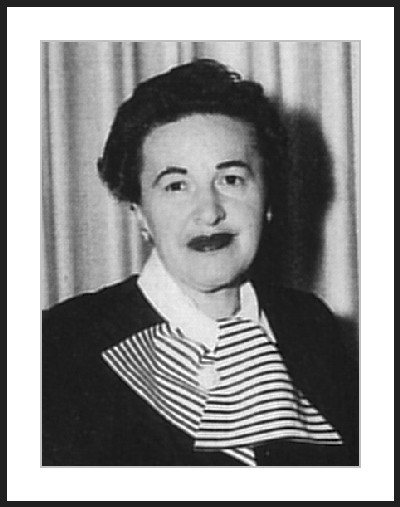
Celia Zylbercweig
cir 1958
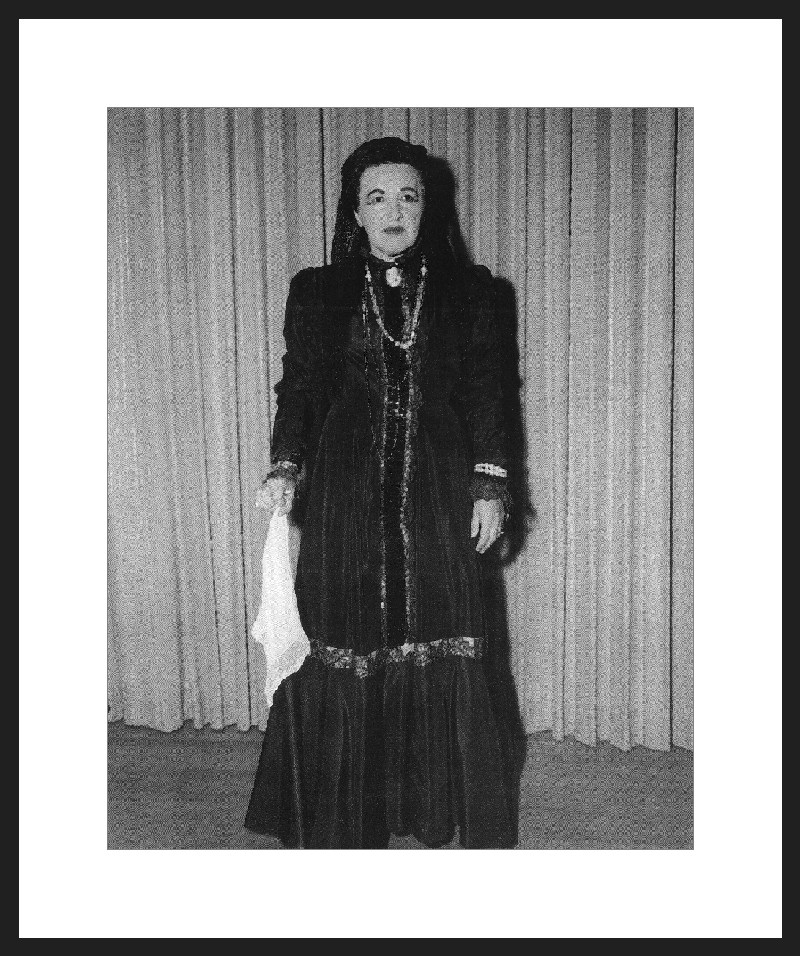
Bottom: as Mirele Efros, in Wilshire Ebell Theatre
production
|
|
|
Celia was born
in
1905 in Chelm, Poland. Her father was a contractor for
the government buildings. She completed Clara
Morgenstern's private folkshul, where she also had
received her Jewish studies. Then she completed the
eight-class philological gymnasium "Stefan Tsarnetski",
and she continued her Jewish studies privately with Feivel Fried. As a member of "Hashomer Hatzair", she
participated in a Hebrew biblical one-acter by teacher
Vadilovski, and since 1920 in the offerings of the
dramatic section of "Hashomer Hatzair" and other drama
circles, in plays such as "Bar kokhba" ("Dinah"), "Ash re"
("Shulamit"), "El nhrut bbl" ("Palmira"), "Der vilder
mentsh" ("Liza"), and in the title role of Orshansky's
"Anna" and Gordin's "Sappho", as well as performing with
declamations during city celebrations.
In 1923 she traveled to
Warsaw, where she had earlier studied singing with a
private teacher, and then for a short time in the city
conservatory. From there in 1924 she traveled to
Essen, Germany, where she again studied singing.
In 1925 she immigrated to
Argentina, where she entered into the troupe of the
Teatro
Ombú, and she acted there as a prima donna with
actors, such as Boris Auerbach, Esther Perlman, Jacob Shefner, Itzhak
Deutsch, in operettas, as well as with Rudolph
Zaslavsky in dramatic productions ("Berta" in "Foter", "Regina" in "Di
geyser" and "Hodl" in "Tuviya der milkhiker".
Then she
toured across the Argentinean province.
According to their daughter, Shirley, this is where her
mother and father (Leon Zuckerberg) met.
After marrying him, they appeared together on stage
in 1927, as well as in a troupe that included
actors Morris and Rosa Brown, Morris and Genya
Gelber, and Aaron Aleksandrov. They then went on a tour across South
and Central America (Chile, Peru, Cuba and Mexico),
where she performed in soubrette and prima donna
roles. In 1928 she acted in several cities in Texas,
in the United States, and in 1929 she was engaged by
Moshe Schorr in Baltimore, where she performed in his
work "Dos yidishe meydl". Celia acted with Clara
Young and Leon Blank, then performed in Detroit on Grushko's
Yiddish radio, and she also participated in a concert in
the local Yiddish theatre. She traveled back with
her husband to Mexico, where she acted with many stars of
the Yiddish stage.
After the death of her
husband (1935) from pneumonia, she continued acting, with Abe Lax, Jacob
Berlin, Zigmunt Turkow, Esther Perlman et al.,
and afterwards, together with them, led a theatre,
bringing in such guest-stars as Ethel and Abe Dorf, Abraham Teitelbaum, Isidore Meltzer, later
going over to the newly created building for Yiddish
theatre with local actors and with the guest-stars
such as
Ludwig Satz (acting as their partner in the comedy
and operetta), Rose Wallerstein and Oscar Ostroff,
Yetta Zwerling and Seymour Rechtzeit.
After her return, she ended her acting in the
theatre, throwing herself into society work,
helping to found a reading circle,
often writing in the local press about the problems
of Jewish culture. She also often was
the person in charge of the receptions for literary guests.
Daughter Shirley recounts the life she had
with her mother in Mexico City, e.g. about her
mother's store there, how her mother brought over
two family members from Poland, and how her mother
introduced herself to the music and culture when she
was a child.
In 1947 Celia married
Zalmen Zylbercweig (editor of the magnificent opus,
the "Lexicon of the Yiddish Theatre"), and then moved
with daughter Shirley to New York with him, where Celia performed on the Yiddish radio and
directed
under the name of Celia Silver a woman's page in "Der amerikaner",
where she also published a range of character
portrayals of actresses Bina Abramowitz, Miriam Kressyn,
Esther Hirshbein, Paulina Kobrin, Malka Lee, Shifra
Weiss, Emma Sheiver, Shoshana Damari, Feigele Panitz,
Bessie Thomashefsky, Rose Shomer Bachelis, Molly
Picon and
Gertrude Berg.
Since August 1948 Celia directed under the name Celia Silver, together with
her husband, the daily Yiddish radio in Los Angeles
("Zylbercweig's Yiddish Radio Hour"), in which she
had from time to time a special women's program,
interviews, occasionally performing in
song, in recitations of Yiddish poetry, and in
dramatizations.
According to daughter Shirley, "Aba (the
affectionate name she had for her stepfather)
traveled a lot of the time (for 'Lexicon' research),
as the years went by. He went to Mexico alone, many
times to have his Lexicon printed there, and my
mother always took care of business here. Like
I said, she was very smart and she knew exactly what
to do with the programs, how to tape, and how to do
all that to get on the air..... Mother would get
guests for the program and take care of the business
aspect of it....She loved it; she was wonderful. And
she could also speak and write seven languages...."
|
|